Science1 hour ago
Naughty 😇•10%
Innovative Ant-Based Digester by Ananya Nagendra Tackles Food Waste
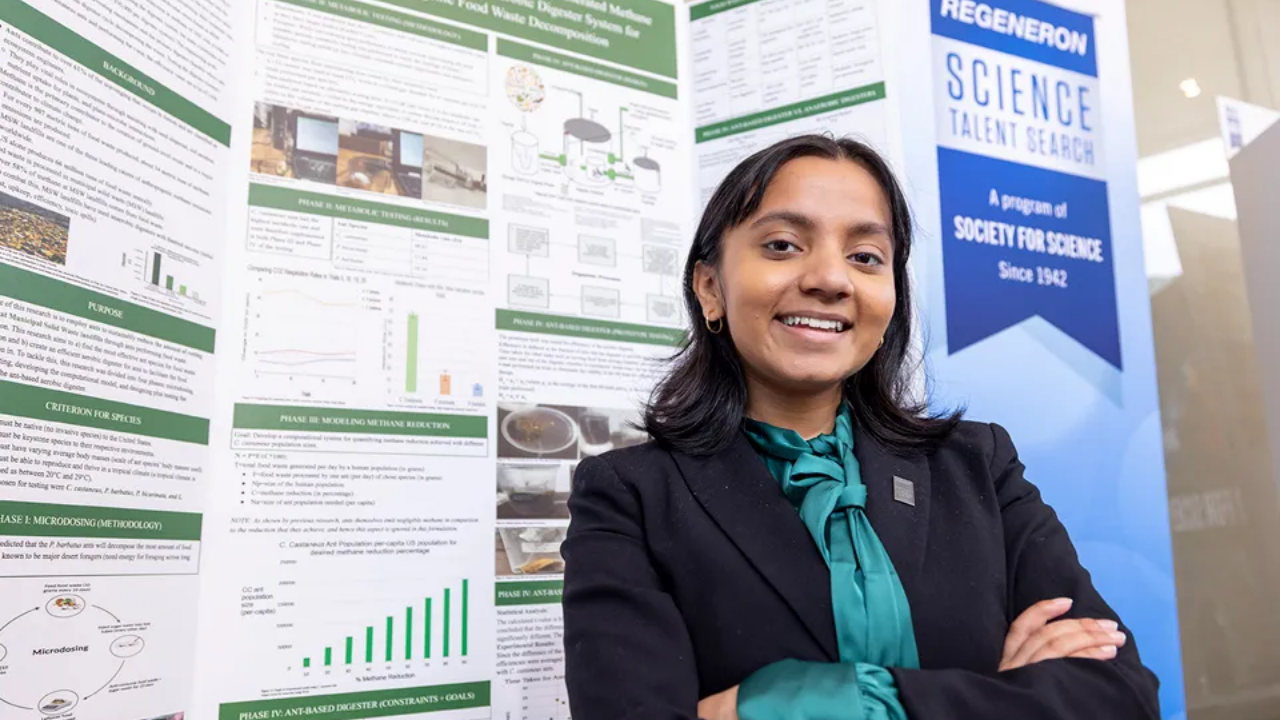
Ananya Nagendra, 18, created an ant-based digester to efficiently process food waste. This innovative system utilizes Camponotus castaneus ants to reduce landfill methane and achieved 83% efficiency in tests. Her research presents a groundbreaking biological solution for managing organic waste, highlighting the potential of nature-inspired technologies.
⚖️ AI Verdict
"Who knew ants could be such eco-friendly waste managers?"
📢 Share Intel:
File ID: #351131Original Source: Times Of India ↗
🤖 SINS Investigator
Ask about this Intel File
🕵️♂️
File Opened for Analysis
Ask me anything about the event, its implications, or who is responsible for the SINS!
Deepen Investigation
Related Intelligence Files
Science5 hours ago
Rohan Naidu: Hyderabad Astronomer Unlocks Early Universe Secrets
Rohan Naidu, a Hyderabad-based astronomer, is revolutionizing our understanding of the early universe. His latest research on a cosmic dawn object reveals a supermassive black hole surrounded by dense gas, shedding light on early black hole growth and the Webb telescope's 'little red dots'. This groundbreaking study could reshape our cosmic knowledge.
View File→
Science19 hours ago
Research's Societal Impact: Insights from the Vice-President
Research serves society's needs, emphasizing its vital role in progress. The Vice-President highlights how academic findings can drive social change and innovation. By aligning research with community goals, we can enhance public welfare and address pressing challenges. This approach fosters collaboration between academia and society for a brighter future.
View File→
Science23 hours ago
IIA Researchers Unveil 3D Model for Coronal Mass Ejection Forecasts
IIA researchers have developed a groundbreaking 3D model to predict Coronal Mass Ejections (CMEs). This innovative tool aims to enhance space weather forecasting, benefiting satellite operations and power grid management. By accurately forecasting CMEs, the model could significantly reduce risks associated with solar storms.
View File→
Science1 day ago
San Diego Student's Red-Light Therapy Accelerates Wound Healing
San Diego student Leanne Fan's red-light therapy enhances wound healing in space. Her $200 device simulates microgravity, boosting tissue regeneration by 95.2%. This innovative treatment shows promise for both flatworms and human cells, offering a groundbreaking solution for astronauts.
View File→